Welcome
Binary Mechanics describes the transition from partial, incomplete quantum mechanics to full, complete quantum mechanics.
History
1994
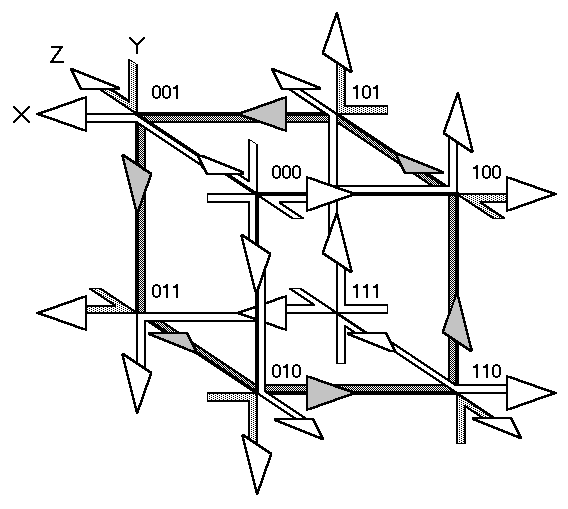
- Binary Mechanics (BM) was developed when I learned in 1994 from former MIT student James S Hughes that the Pauli spin matrices used in conventional quantum mechanics may be rotated to reveal that they define eight vertices of a cube.
- For decades, quantum mechanics (QM) investigators knew these Pauli spin matrices were essential for their time-development equations to produce event probabilities that accurately predicted real-world experimental results.
- But these investigators have apparently been unaware that the Pauli spin matrices define eight vertices of a cube.
- My obvious question was: What is the size of this cube? One might surmise that this cube size would be an important number to know. Why? The cube size in meters would appear to be a value which guaranteed the success of QM in predicting experimental results over many decades.
- I also thought that the cube size might be an important physical constant in some way quantizing physical events in space.
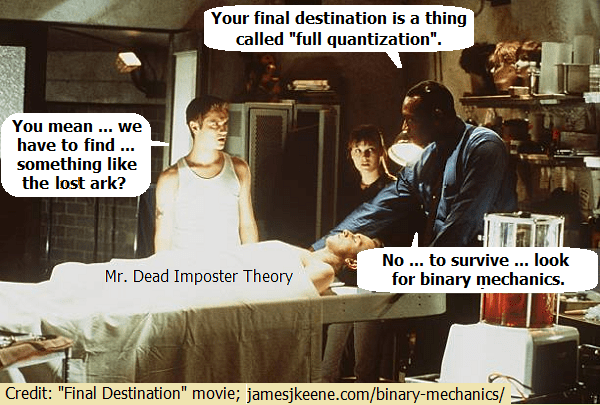
- If cube size is quantized, why not just quantize everything? Thus, the full quantization postulates of BM were born, namely that space in meters, time in seconds and energy in kilograms (or Joules or eV) were each quantized.
- Notice that full quantization maps its values, such as the cube size above, now known as the Keene Scale, to the basic SI units of measurement used in physics: meters, seconds and energy expressed in kilograms.
- This endeavor led to over 100 scientific papers on the free, on-line Journal of Binary Mechanics.
2010
The original paper presenting binary mechanics (BM) [1] had two parts:
1) Partial-to-full quantum mechanics (QM) upgrade using space, time and energy quantization to define the system state bit function replacing the wave function and its time development bit operations required since QM infinitesimal operator math was inapplicable:
2) More results of selected applications were presented, to further elaborate and justify the basics of binary mechanics:
The fundamental justification was that the equations provide exact results for all physical phenomena.
The original paper was written and notarized in 1994 and first published in 2010.
References
[1] Keene, J. J. “Binary mechanics” J. Bin. Mech. July, 2010.
2011
Several themes occur in some 26 papers in 2011, where consequences of binary mechanics (BM) postulates were examined.
1) Many physics sub-specialties were covered. The average physicist may be expert in terms of literature knowledge and research methods in only one, or at best a few, sub-specialties. BM is a comprehensive theory including both quantum and gravitation phenomena covering all sub-specialties, but the author, and probably nobody, is expert in them all.
2) Hence, many of the reports are pilot studies, initial probes in specialized areas such as absolute maximum temperature [5] [7], superconductivity [8], vacuum thresholds [12], gravity as derivative force [13] [23], thermodynamics [15], baryogenesis [18], dark matter [19] and black body and hydrogen spectrums [22]. Teams of specialists are appropriate to study these topics further.
3) A third theme was more detailed description of BM postulates and initial new findings: Lorentz force [1] (from 2010), BM spatial objects [2], the remarkable central baryon bit cycle [3], investigators embedded in BM space [4], an electromagnetic (EM) bit operation revision [6], the strong bit operation [9], quantized velocity [14], a physics glossary [17], EM plane waves derived from BM postulates [20], solved physics mysteries [21], a “law” of motion [24] and electron shape [25].
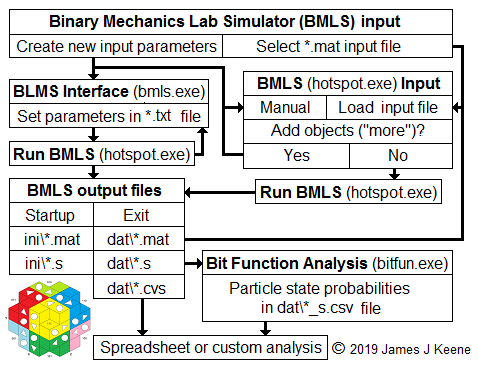
4) The Binary Mechanics Lab Simulator (BMLS) was continuously developed producing data in the research reports. BMLS can implement selected permutations of bit operations order for time evolution of the system state. In the research reports, several different orders were used over time. However, one and only one bit operations order can be physically correct, since each permutation produces slightly different results [16].
At present, SUVF is thought to be the correct bit operations order, where S is Scalar, U is unconditional, V is vector and F is strong. Where applicable, the data collection in papers using BMLS should be repeated with the SUVF order. The plan is to update selected research reports by adding new SUVF data in brackets, preserving the original reports for the record. Change in major results is not expected, although such updated results would be more appropriate for further quantitative analysis.
References
[1] Keene, J. J. “Lorentz force in binary mechanics” J. Bin. Mech. July, 2010.
[2] Keene, J. J. “Physical interpretation of binary mechanical space” J. Bin. Mech. February, 2011.
[3] Keene, J. J. “The central baryon bit cycle” J. Bin. Mech. March, 2011.
[4] Keene, J. J. “Captives in a binary mechanical universe” J. Bin. Mech. March, 2011.
[5] Keene, J. J. “Maximum temperature below half maximum bit density” J. Bin. Mech. March, 2011.
[6] Keene, J. J. “Electromagnetic bit operations revised” J. Bin. Mech. March, 2011.
[7] Keene, J. J. “Absolute maximum temperature” J. Bin. Mech. March, 2011.
[8] Keene, J. J. “Superconductivity in binary mechanics” J. Bin. Mech. March, 2011.
[9] Keene, J. J. “Strong operation disabled by inertia” J. Bin. Mech. March, 2011.
[10] Keene, J. J. “Emission power and wavelength vs temperature” J. Bin. Mech. March, 2011.
[11] Keene, J. J. “Binary mechanics simulator updated” J. Bin. Mech. March, 2011.
[12] Keene, J. J. “Vacuum thresholds” J. Bin. Mech. March, 2011.
[13] Keene, J. J. “Gravity looses primary force status” J. Bin. Mech. April, 2011.
[14] Keene, J. J. “Electron acceleration and quantized velocity” J. Bin. Mech. April, 2011.
[15] Keene, J. J. “Ideal gas law: limited density range” J. Bin. Mech. May, 2011.
[16] Keene, J. J. “Bit operations order” J. Bin. Mech. May, 2011.
[17] Keene, J. J. “Physics glossary” J. Bin. Mech. May, 2011.
[18] Keene, J. J. “Baryogenesis” J. Bin. Mech. May, 2011.
[19] Keene, J. J. “Dark matter and energy” J. Bin. Mech. May, 2011.
[20] Keene, J. J. “Quantized electromagnetism” J. Bin. Mech. May, 2011.
[21] Keene, J. J. “Solved physics mysteries” June, 2011.
[22] Keene, J. J. “Blackbody and hydrogen spectrums from binary mechanical postulates?” J. Bin. Mech. June, 2011.
[23] Keene, J. J. “Gravity increased by lunar surface temperature differential” J. Bin. Mech. August, 2011.
[24] Keene, J. J. “A law of motion” J. Bin. Mech. September, 2011.
[25] Keene, J. J. “Physics news: electron shape” J. Bin. Mech. September, 2011.
[26] Keene, J. J. “Physics news: faster than light” J. Bin. Mech. September, 2011.
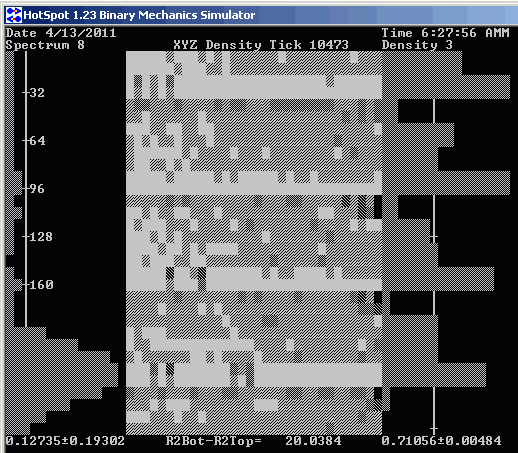
2014
“Physics News: Gravity Game-Changer”
From 2011 to 2014, the author was waiting for a number of peer-reviewed physics journals, such as PhysRevD, to review and hopefully publish his 2011 lunar laser ranging study on the effect of surface temperature on earth-moon gravitation, which appeared to obviously exclude General Relativity. This paper was submitted to an ample number of journal editors. All except one refused to even formally review the paper; one returned comments from reviewers who appeared to be incompetent in the subject matter. Thus, the author wrote his own review in the “gravity game-changer” paper.
At some point, the author might disclose the names of this list of peer-reviewed journals, all losers in the finish declared in 2018 of the century-long physics grand championship race to derive fundamental constants from first principles.
“Matter-Antimatter Asymmetry Mechanism”
Binary mechanics (BM) postulates were used to document a major puzzle piece, if not a complete solution, to the so-called matter-antimatter asymmetry mystery, no doubt while some losing labs in the greatest race in physics in 100 years continue to the present to justify research funding in search of a solution.
“Fundamental Forces In Physics”
Mathematical definitions of fundamental forces based on BM were presented, replacing the outdated, 20th century custom of defining forces based on observed particle interactions — a more primitive approach lacking scientific merit and discipline.
“Spot Unit Components Of Elementary Particles”
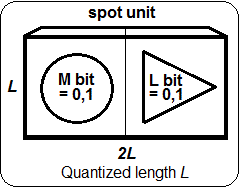
A spot unit consists of two adjacent size L spatial cubes, where L is the BM primary length constant. One spot unit cube is a M bit locus; the other, a L bit locus, where M and L bits are restricted to 0 or 1 values to quantize energy. 1-state M or L bits represent energy quanta, an essential tool for quantitative analysis of energy. M and L bit state was defined as the quantized absolute value of the x and y components in complex amplitudes used in quantum mechanics — sign(x)abs(x) + isgn(y)abs(y) — in the framing of BM postulates from a pair of relativistic Dirac spinor equations of opposite handedness.
A spot is a spatial assembly of three spot units, one in each X, Y and Z direction in quantized space. There were only eight different spot types, which corresponded to eight and only eight elementary particles. The longer list in the Standard Model are all one of these eight or compositions of them.
This paper defined hypothetical sub-components of spot units thought to be required for the time-development bit operations to function. Continuing application of the four bit operations to the system state (bit function) of the universe is what keeps our world humming along as it does. This information was used to analyze the minimum number of spot unit types required to assemble the eight different elementary particles.
The result was that only four spot unit types were required implying that all particles are composed of just four types of spatial elements called spot units. Even better, two pairs of the four types were almost identical except for just one sub-component position. Hence, one might say that only two types of spot units account for all observed matter and antimatter, each type with two “variations”. These are the smallest spatial objects known in physics.
The number 2 appears again — the number of allowed M or L locus states: 0 or 1. Yes, it’s a binary universe, folks.
References
[1] Keene, J. J. “Physics news: gravity game-changer” J. Bin. Mech. October, 2014.
[2] Keene, J. J. “Matter-antimatter asymmetry mechanism” J. Bin. Mech. October, 2014.
[3] Keene, J. J. “Fundamental forces in physics” J. Bin. Mech. October, 2014.
[4] Keene, J. J. “Spot unit components of elementary particles” J. Bin. Mech. October, 2014.
2015
Several themes applying binary mechanics (BM) postulates were pursued in 2015:
1) Derivation of basic physics constants from BM first principles included zero electron electron dipole moment (EDM) [2], Planck’s constant h and hence intrinsic electron spin [3], intrinsic electron magnetic moment [4] and vacuum light velocity c [8].
The four time-development bit operations are key BM first principles and the Binary Mechanics Lab Simulator (BMLS) applies them to a selected initial system state (bit function) [16]. Light velocity c was demonstrated to approximate V/π, where bit velocity V = L/T and L and T are BM primary length and time constants respectively. Thus, light speed c was promoted from unexplained observation to derived value.
2) Predictions of BM first principles were confirmed by other labs including zero electron electron dipole moment (EDM) [2] and non-spherical proton shape [5]. Also, predicted opacity of absolute vacuum was confirmed in simulations [8].
3) More “unsolved physics mysteries” moved to the “solved” category including a full account of particle up and down spin as a function of quantized time phase factors [1] and anomalous electron magnetic moment as effects of intrinsic electron 1-state bits affecting measuresments or in other words, basically a measurement artifact [4].
4) Pillars of outdated, incomplete, partial quantum mechanics continued to crumble with debunking of “up-down” spin [1], demonstration of a non-zero proton electric dipole moment (EDM) [6], description of the Higgs field, requiring obsolete continuous space-time theory, as a primitive version of elementary particle spot architecture in BM [7] [9], spurious Standard Model math used to justify use of classical continuous space-time theory instead of energy-space-time quantization in BM [14] and debunking the Bell inequality violation myth [17].
5) Preceding step 4 (“we win”), Mahatma Gandhi’s step 2 (“laugh”, ridicule) and step 3 (“attack”) became evident [15].
References
[1] Keene, J. J. “Particle up-down spin and quantized time parity” J. Bin. Mech. January, 2015.
[2] Keene, J. J. “Zero electron electric dipole moment” J. Bin. Mech. January, 2015.
[3] Keene, J. J. “Intrinsic electron spin and fundamental constants” J. Bin. Mech. January, 2015.
[4] Keene, J. J. “Intrinsic electron magnetic moment derivation” J. Bin. Mech. February, 2015.
[5] Keene, J. J. “Non-spherical proton shape” J. Bin. Mech. February, 2015.
[6] Keene, J. J. “Non-zero proton electric dipole moment” J. Bin. Mech. February, 2015.
[7] Keene, J. J. “Higgs boson buries standard model?” J. Bin. Mech. March, 2015.
[8] Keene, J. J. “Light speed amendment” J. Bin. Mech. March, 2015.
[9] Keene, J. J. “If you want to keep your Higgs boson…” J. Bin. Mech. March, 2015.
[10] Keene, J. J. “Proton and electron bit cycles” J. Bin. Mech. April, 2015.
[11] Keene, J. J. “Expanding universe questions” J. Bin. Mech. April, 2015.
[12] Keene, J. J. “Three proton bit cycles from one positron spot” J. Bin. Mech. April, 2015.
[13] Keene, J. J. “Elementary particle energies” J. Bin. Mech. April, 2015.
[14] Keene, J. J. “Physics standard model forensics” J. Bin. Mech. May, 2015.
[15] Keene, J. J. “Polchinski’s ‘new normal’ physics” J. Bin. Mech. June, 2015.
[16] Keene, J. J. “Binary Mechanics Lab Simulator update” J. Bin. Mech. December, 2015.
[17] Keene, J. J. “Bell inequality violation myth debunked” J. Bin. Mech. December, 2015.
2016
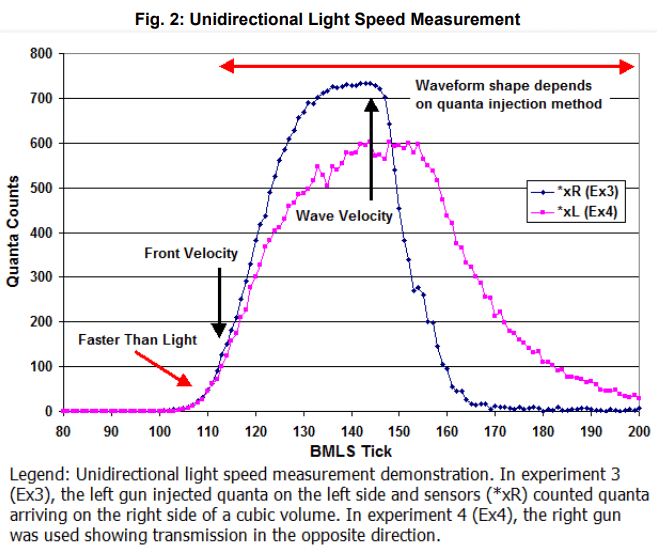
While many in the physics community continued attempts to move “beyond” the Standard Model (SM), JBinMech articles in 2016 continued to undermine and replace it almost completely with its upgrade: binary mechanics (BM).
1) The bit function, BM upgrade to SM wave function usage, was shown to represent position and momentum. First, cooling a system to zero Kelvin resulted in zero particle motion [1]. Second, different randomly selected initial states produced different particle motion over time [3]. Third, use of the bit function to simulate a magnetic field produced predictable particle displacements [14].
2) General Relativity was further ransacked by
(a) demonstration that about half of the GRACE satellite pair “gravity” measurement variance was nothing more than ocean surface temperature [9], supporting BM predictions previously confirmed with lunar laser ranging (LLR) in 2011 and no doubt embarrassing the General Relativity believers among GRACE project designers and
(b) LIGO “gravitational wave” results were shown to be entirely consistent with BM predictions based on energy (1-state bit) density fluctuations [13]. Disclosure: Although almost everything NASA does confirms BM predictions, Binary Mechanics Lab (BML) has no formal relationship with NASA. Lesson: Theories of principal investigators can be a distraction; focus on their data.
3) BML Simulator (BMLS) software was improved by adding a batch mode allowing automation of multiple experiments in one user-initiated run [11] and a more user-friendly interface [12]. The “bit operations engine” in the BMLS is apparently the state-of-the-art in calculation of time-development of the state of any physical system.
4) BMLS software was used to demonstrate several phenomena: light speed measurement at zero Kelvin where random electomagnetic radiation (heat) was absent and hence, could not interfere with the measured signal transmission [2], standing waves in an electron gas in perfect vacuum [10] and matter creation [16] [17].
5) Further consequences of BM first principles were explored. Faster than light motion was analyzed due to previous observations that a small number of energy quanta typically arrived at the target sensor slightly before the main wavefront of the signal [4]. Demonstration that apparently all “weak force” particle interactions are completely accounted for by the unconditional bit operation [7]. The composition of SM particles including mesons and baryons was enumerated [6] [8].
6) BML joined other labs in producing self-promotional literature. A pop quiz challenged the reader to “spot the physics theory” [5]. Without space-time-energy quantization, SM math modelling every point using continuous space-time (e.g., real number position coordinates) requires belief in miracles, namely that an infinite number of infinitely small things exist in any arbitrary volume, where “things” are multiple field encoders and operater action devices [15]. And in defunct General Relativity, the “things” are inertial motion guidance devices. Of course, BML suggests that physicists leave the miracles to theologians.
References
[1] Keene, J. J. “Zero degrees Kelvin” J. Bin. Mech. January, 2016.
[2] Keene, J. J. “Light speed at zero Kelvin” J. Bin. Mech. January, 2016.
[3] Keene, J. J. “Particles in a box” J. Bin. Mech. January, 2016.
[4] Keene, J. J. “Faster than light” J. Bin. Mech. January, 2016.
[5] Keene, J. J. “Spot the physics theory” J. Bin. Mech. January, 2016.
[6] Keene, J. J. “Standard model particle composition” J. Bin. Mech. January, 2016.
[7] Keene, J. J. “Weak force boondoggle” J. Bin. Mech. January, 2016.
[8] Keene, J. J. “Meson and baryon composition” J. Bin. Mech. January, 2016.
[9] Keene, J. J. “GRACE: gravity surface temperature dependence” J. Bin. Mech. February, 2016.
[10] Keene, J. J. “Electron gas standing waves” J. Bin. Mech. February, 2016.
[11] Keene, J. J. “BML simulator batch mode” J. Bin. Mech. February, 2016.
[12] Keene, J. J. “BML simulator interface” J. Bin. Mech. March, 2016.
[13] Keene, J. J. “LIGO gravity wave mechanism” J. Bin. Mech. April, 2016.
[14] Keene, J. J. “Particle motion representation” J. Bin. Mech. May, 2016.
[15] Keene, J. J. “Quantization asymmetry” J. Bin. Mech. May, 2016.
[16] Keene, J. J. “Matter creation” J. Bin. Mech. May, 2016.
[17] Keene, J. J. “Matter creation sequel” J. Bin. Mech. May, 2016.
2018
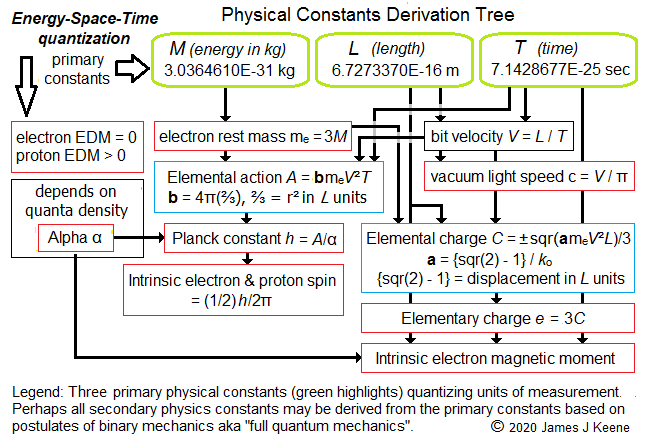
JBinMech 2018 started with the headline: Hurricane Hits Physics [1]. In Sep, 2017, hurricane Maria literally destroyed the Binary Mechanics Lab (BML) building with a six month internet/phone blackout. Meanwhile, a figurative hurricane continued to hit the physics community with BML’s first-ever derivation of Planck constant h from first principles in 2015.
More basic physics constants were derived from binary mechanics postulates: proton-electron mass ratio [4], elementary charge e [9] and Planck constant h and intrinsic proton spin, based on the proton bit cycle [12].
A Bit Function Analysis program (BFA) was a major addition to BML software where users could analyze any system state (bit function saved to *.s file) as incidence of 64 “particle states” for each of eight elementary particles [2]. Examples: Particle states evolution could be studied starting with an initial state with random seeding of 1-state bits at a selected bit density [3]. The exact bit function defining each elementary particle could be studied at zero Kelvin, where all 1-state bits representing motion and heat are absent [5].
Analysis of the binary mechanics model of physical space yielded new discoveries of lepton-quark and quark-antiquark energy (1-state bit) fluxes defining three particle motion mechanisms: 1) lepton motion, 2) lepton-mediated proton motion and 3) quark-antiquark proton motion [6]. Recall that physics addresses how things work, and in this case, how things move.
Experiments demonstrated predicted particle motion in magnetic and electric fields [7] [8]. Magnetic pulse injection results suggested 1-state L bits may define “magnetic monopoles”, at least under selected conditions.
A binary mechanics FAQ was published [10] highlighting the BML win of the century-old physics grand championship race to derive constants from first principle of a coherent, comprehensive physical theory. Finally, memes for physicists started to appear on BML bulletin boards [11] [13].
References
[1] Keene, J. J. “Hurricane hits physics” J. Bin. Mech. April, 2018.
[2] Keene, J. J. “Bit function analysis” J. Bin. Mech. April, 2018.
[3] Keene, J. J. “Particle states evolution” J. Bin. Mech. April, 2018.
[4] Keene, J. J. “Proton-electron mass ratio derivation” J. Bin. Mech. April, 2018.
[5] Keene, J. J. “Zero Kelvin particle states” J. Bin. Mech. May, 2018.
[6] Keene, J. J. “Particle flux and motion” J. Bin. Mech. May, 2018.
[7] Keene, J. J. “Particle motion after magnetic pulse” J. Bin. Mech. June, 2018.
[8] Keene, J. J. “Particle motion in electric fields” J. Bin. Mech. June, 2018.
[9] Keene, J. J. “Elementary charge derivation” J. Bin. Mech. June, 2018.
[10] Keene, J. J. “Binary mechanics FAQ” J. Bin. Mech. August, 2018.
[11] Keene, J. J. “Memes for physicists” J. Bin. Mech. December, 2018.
[12] Keene, J. J. “Intrinsic proton spin derivation” J. Bin. Mech. December, 2018.
[13] Keene, J. J. “Memes for physicists” J. Bin. Mech. December, 2018.
2019
In 2019, the papers on the free, on-line JBinMech from 2010 to 2018 were published in an archive book “Journal of Binary Mechanics 2010-2018” [1]. As of this writing (May 24, 2021), this archive has been revised to include all the updates in the on-line version. Some authors may prefer to cite papers as chapters in the archive book rather than as internet links.
Binary Mechanics Lab (BML) also publishes videos on YouTube, Bitchute and Rumble.
Research reports recorded several significant advances:
- In “Zero Kelvin particle composition” [2], Bit Function Analysis technology developed at BML was used to describe elementary particle composition at zero Kelvin where quanta (1-state bit loci) representing electromagnetic radiation or particle motion are absent.
- With previous BML reports strongly suggesting that binary mechanics postulates achieve a unified treatment of both quantum and gravity-related effects, “Quantum gravity mechanisms” [3] presented further data analysis supporting a multi-factor approach to gravitational phenomenon.
- “Electron energy homeostasis” [4] presented data analysis suggesting negative-feedback mechanisms appear to regulate electron particle energy content.
- “Vacuum composition” [5] debunks the myth that perfect vacuum and almost all of the volume of a single atom are “empty space”. Instead, the data suggest that “empty space” is literally teaming with energy quanta, even at zero Kelvin, at which about 88% or more of final state quanta was perfect vacuum energy content.
References
[1] Keene, J. J. “JBinMech 2010-2018” JBinMech January, 2019.
[2] Keene, J. J. “Zero Kelvin particle composition” JBinMech February, 2019.
[3] Keene, J. J. “Quantum gravity mechanisms” JBinMech March, 2019.
[4] Keene, J. J. “Electron energy homeostasis” JBinMech March, 2019.
[5] Keene, J. J. “Vacuum composition” JBinMech December, 2019.
2020
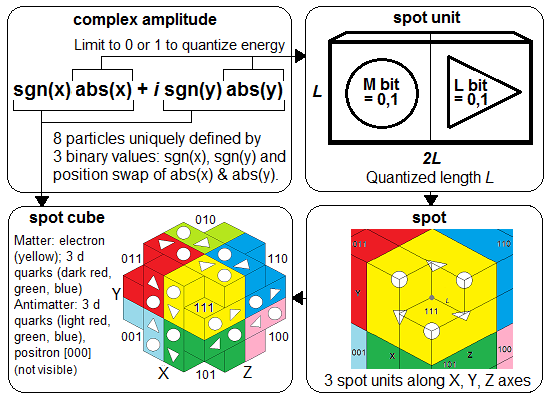
Eight papers and research reports in 2020 further cemented the clear lead of JBinMech as the premier journal for milestone advances in particle and theoretical physics.
Light speed has been an unexplained observation wrongly characterized as a “fundamental physical constant” [1]. Hence, “Light speed derivation” [2] and previous reports deriving light speed for the first time from first principles, using three different measurement methods, may represent a remarkable, even stunning, development in this story that merits careful examination. “Binary mechanics postulates” [3] summarized these first principles based on quantization of space, time and energy, dubbed full quantization, in 17 simple equations without any reference to, or use of, unexplained measurements (c, h, e, me, etc), traditionally called fundamental constants, as input parameters.
“Fine structure constant derivation” [4] provided a credible, possible definition of the α value based only on binary mechanics postulates.
Binary mechanics postulates do not require that linear and angular momentum are separately conserved, as Newton’s work is commonly presented. While macroscopic observations generally support the idea of separate conservation of linear and angular momentum, the inertial propulsion phenomenon in gyroscope behavior raised questions about this popular assumption. “Inertial propulsion mechanism” [5] documented how quanta (1-state bit loci) may routinely exchange linear and angular momentum components at the quanta microscopic level.
Boeing uses “inertial propulsion gyroscopes” to “levitate” low altitude satellites which would otherwise fall to earth prematurely, but can’t explain it. “Motion law: gravitation edition” [6] used the Keene motion law of binary mechanics to describe the fundamental mechanism for weight reduction produced by gyroscopes with horizontal rotors, citing experimental results.
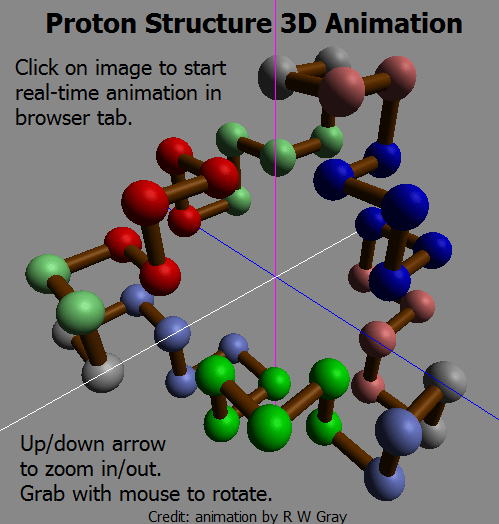
“Proton structure 3D animation” [7] presented a 3D animation of proton structure and discussed key features determining observed proton behavior and why QCD (quantum chromodynamics) became obsolete due to use of legitimate, but inapplicable, math tools.
Finally, an editorial, “Physicists had a chance and they blew it” [8], described how the physics community missed a major opportunity. Instead, BML crossed the finish line and won the greatest race in physics in over 100 years. However, the good news is the abundance of additional opportunities — more constants to derive from first principles, more detailed examination and replication of many pilot studies in JBinMech, more fundamental questions to address with further research, problems in all specialties in physics. Many new races to win.
References
[1] Keene, J. J. “Fundamental physical constants doctrine” JBinMech October, 2020.
[2] Keene, J. J. “Light speed derivation” JBinMech February, 2020.
[3] Keene, J. J. “Binary mechanics postulates” JBinMech November, 2020.
[4] Keene, J. J. “Fine structure constant derivation” JBinMech June, 2020.
[5] Keene, J. J. “Inertial propulsion mechanism” JBinMech May, 2020.
[6] Keene, J. J. “Motion law: gravitation edition” JBinMech June, 2020.
[7] Keene, J. J. “Proton structure 3D animation” JBinMech May, 2020.
[8] Keene, J. J. “Physicists had a chance and they blew it” JBinMech November, 2020.
2025
JBinMech presented how the proton (or hadron) bit cycle forms a “proton network” for atomic nucleus formation. This mechanism may be a “foundational principle in nuclear physics” [1].
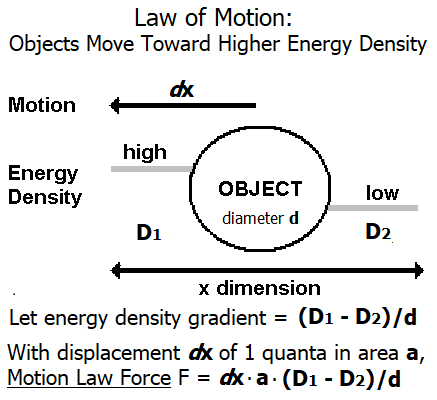
Binary Mechanics equations 1-6 define an absolute reference frame required to determine if an object is moving or stationary. With this absolute frame, the mechanism of all particle motion could be studied and defined leading to the Keene law of motion [2].
Next, “Binary mechanics equations” presented further detail featuring their definition of four types of “fields” [3].
A frequently-asked-question was addressed: how the so-called “fundamental constants” (c, e, h, electron rest mass, etc) were reverse engineered to discover the binary mechanics primary constants known as the Keene scale [4].
Transition from the quantum mechanics wave function to the binary mechanics bit function is inevitable [5].
Major research organizations, such as CERN, Fermilab and DARPA, apparently have not yet publically released their “post-game forensics” analyzing why their researchers lost the greatest race in physics in the last 100 years to the previously little-known Binary Mechanics Lab. Thus, the author presented a number of “physics follies” which may have landed them in the losers circle in the century-long physics grand championship race [6].
“Binary mechanics cosmology” is based on the premise that the most complete and comprehensive physical model is the essential starting point for a viable cosmology [7].
References
[1] Keene, J. J. “Proton cycle network: foundational principle in nuclear physics” JBinMech March, 2025.
[2] Keene, J. J. “Law of motion based on mechanism of motion” JBinMech March, 2025.
[3] Keene, J. J. “Binary mechanics equations” JBinMech March, 2025.
[4] Keene, J. J. “How to derive the primary and secondary physical constants” JBinMech March, 2025.
[5] Keene, J. J. “Quantum technology advance” JBinMech September, 2025.
[6] Keene, J. J. “Physics follies: post-game forensics” JBinMech October, 2025.
[7] Keene, J. J. “Binary mechanics cosmology” JBinMech December, 2025.
Binary Mechanics Lab Software
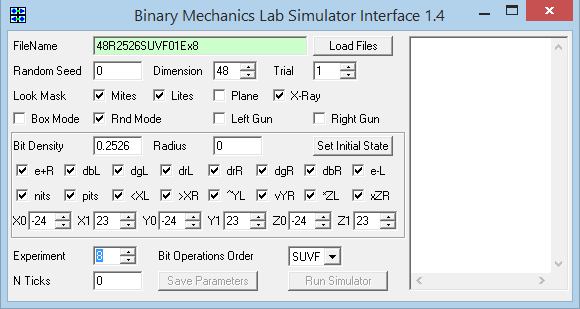
Download the latest BML Simulator v3.13
- Selected BML software may be downloaded here: bml.zip
- These include the BML simulator (hotspot.exe) and a user-friendly windows interface to launch the simulator with an almost unlimited control of initial system state (bmls.exe).
- bml.zip is updated from time to time and updates will be announced here and in my x.com posts.
 James J Keene